

18627
Contemporains
Olivier DEBRÉ
Paris 1920 – 1999
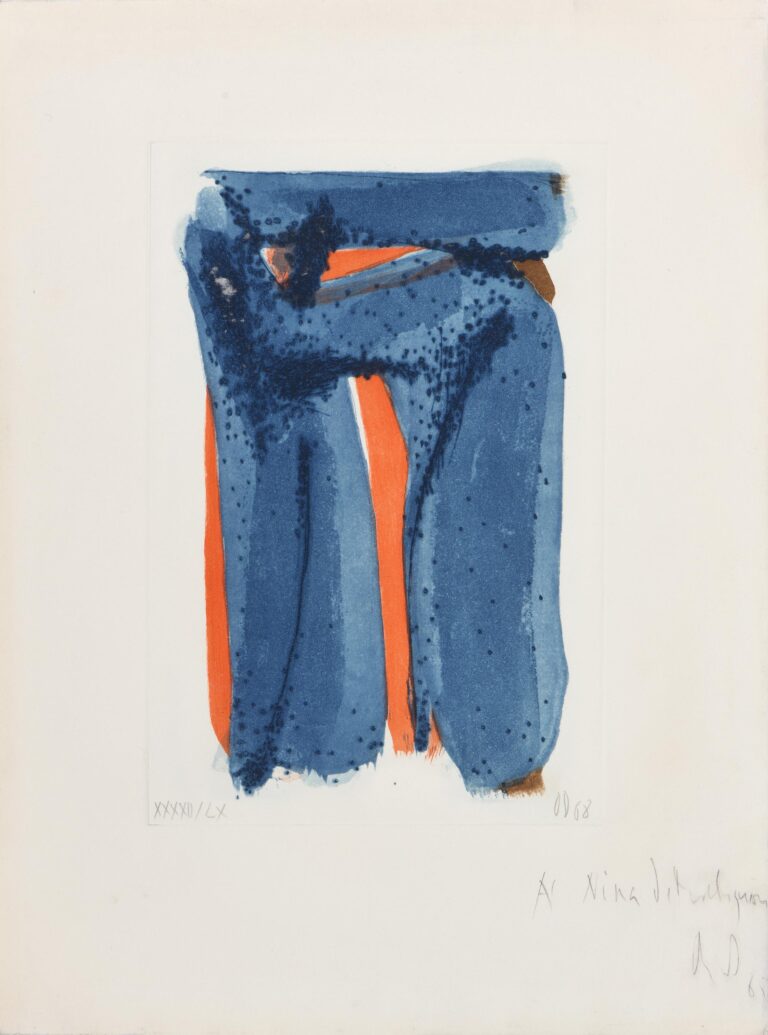
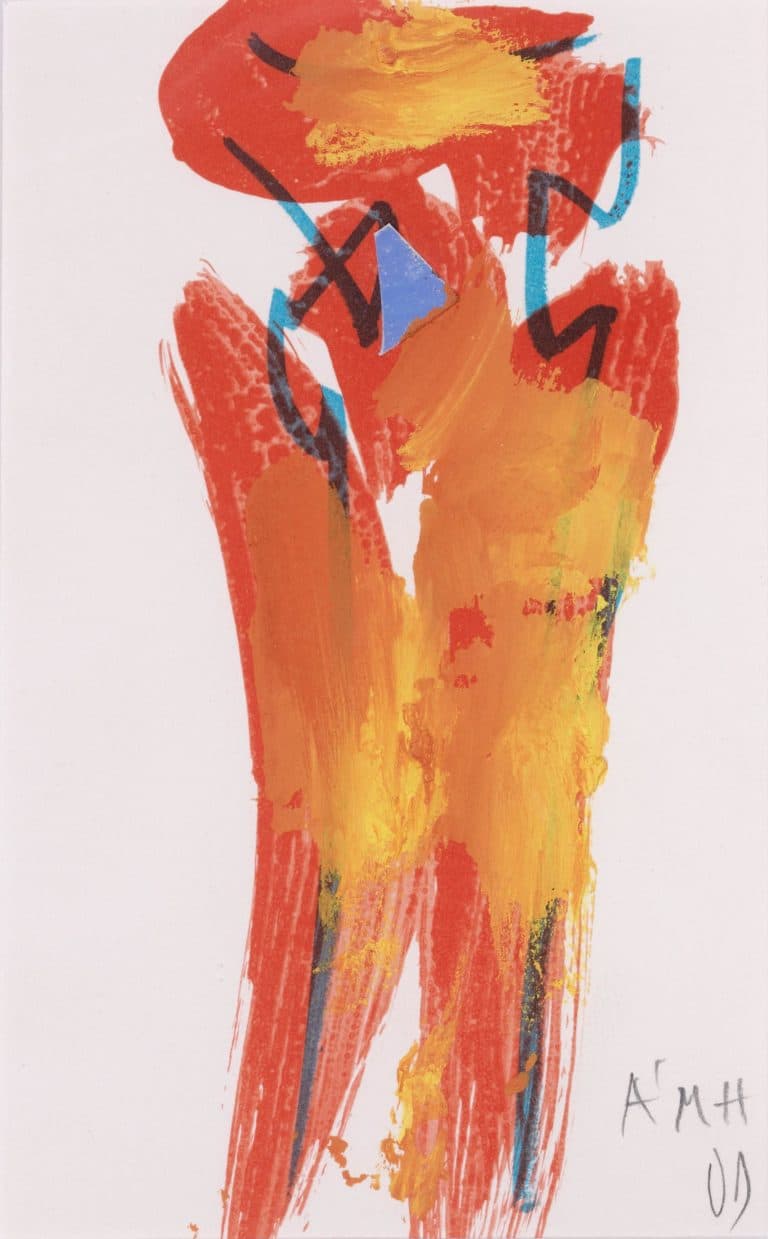
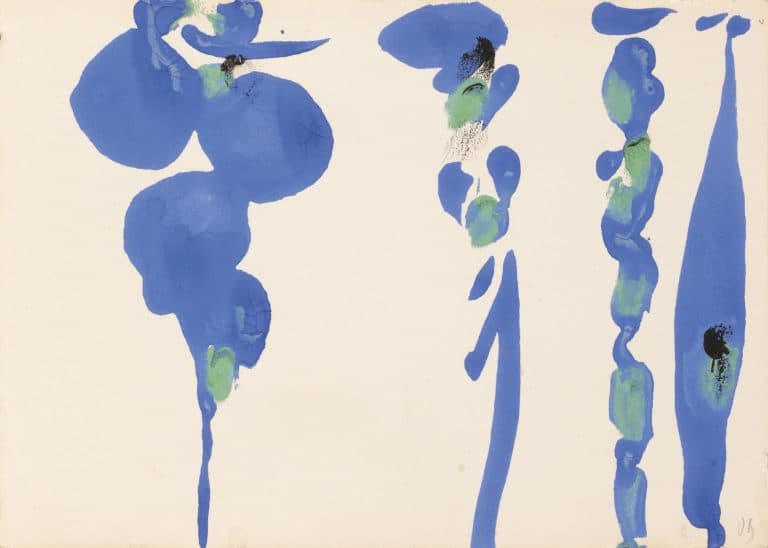
After creating his very first abstract paintings during the winter of 1942–1943, Debré gained experience in lithography at Jean Pons’s studio on Rue de Vaugirard. Around the same time, he produced numerous ink drawings with a strongly calligraphic style. It was during this period that the term “signes-personnages” first appeared.
This series of “sign-figures” developed primarily from 1945 onward, driven by a desire to convey, through the expressiveness of his brushwork, his emotional response to the horror of the concentration camps. At the time, it seemed inconceivable to the artist not to express himself. However, no figurative representation seemed capable of illustrating the shock he felt; instead, he chose a semi-abstract, brutal, and frenetic mark—inspired by a reality whose memory Olivier Debré had made his own—to convey his sensations and impressions. From that moment on, the artist clearly began to explore the influence of the psyche and emotion on form. Conventionally, he is classified among the painters of “lyrical abstraction,” a term he preferred to “fervente abstraction.”
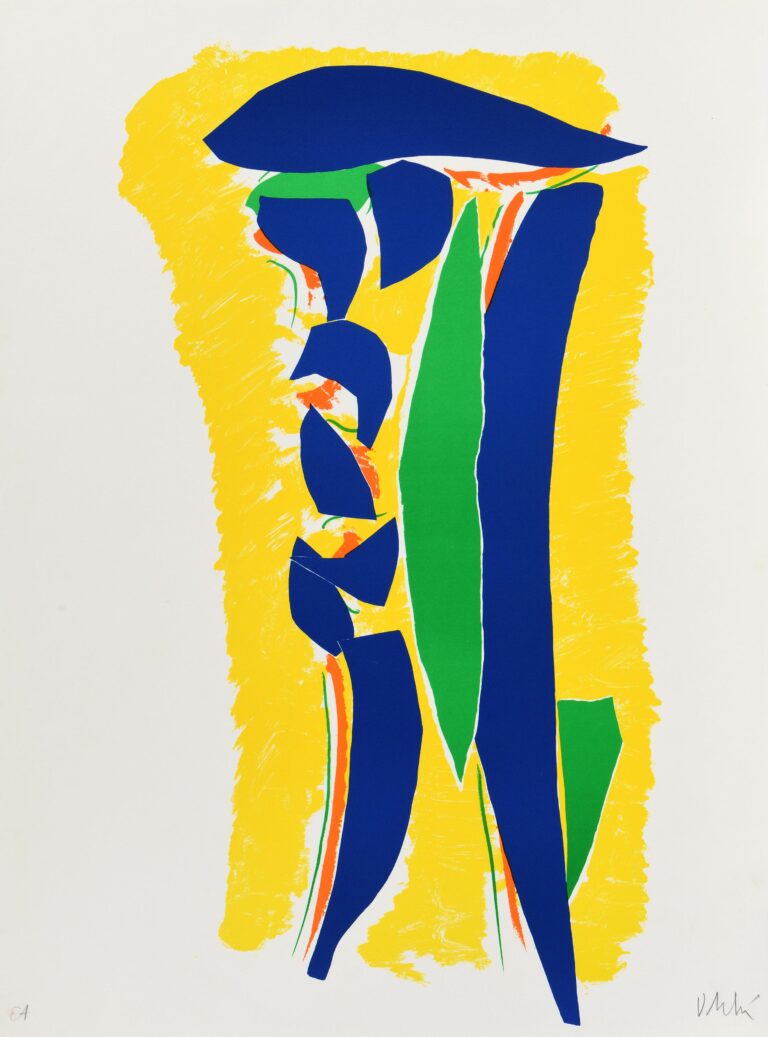
The artist is also known for having designed the stage curtains for the Comédie Française, the Hong Kong Opera, and the Shanghai Opera, and for having adapted this theme into lithographs.
Works by Olivier DEBRÉ
18630
Contemporains
15272
Contemporains
6852
Contemporains
3272
Contemporains