


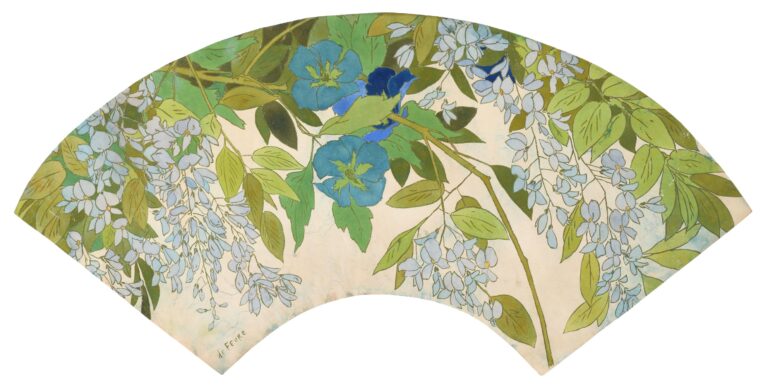
19509
19th–20th centuries
Georges de FEURE
1868 - 1943
Born in Paris in 1868 to a Dutch father, an architect, and a mother from Liège, Georges de Feure, whose real name was Georges Joseph Van Sluijters, moved to the Netherlands in 1870 because of the Franco-Prussian war. In September 1886, at the age of eighteen, de Feure was admitted to the prestigious Rijksakademie voor Beeldende Kunsten in Amsterdam, but soon left to settle in Paris. From 1889, de Feure lived on the Butte Montmartre, where he frequented the likes of Henri Gabriel Ibels and Marcellin Desboutin, as well as Maurice Ravel, Erik Satie and Claude Debussy. From 1892 onwards, Georges de Feure worked as a lithographer, mainly in colour, and as a painter. It was also during this period that the artist became interested in symbolism and began to exhibit his work, notably at the Salons de la Rose+Croix and the Salon des Cent. At the beginning of the 20th century, de Feure abandoned symbolism in favour of Art Nouveau. A close friend of Siegfried Bing, he helped design and decorate the Art Nouveau pavilion for the 1900 Universal Exhibition.
The figure of the seductive woman fascinated de Feure, and was a recurring theme in the works he produced during his Symbolist period. On this subject, Octave Uzanne, a friend of the artist and man of letters, wrote in 1897: « One feels that he loves woman in her supreme beauty, that he is the supreme male. He strives to paint, in all her metamorphoses, the eternal feline, the woman of a thousand lines, of a thousand seductions, the woman of selfish love, flower of all intoxications, stem of all vices, source of all evils, soul of all profane joys. He sees in these sirens nothing but demonesses whose mission, as Saint Augustine thought, is to increase sin, destroy wills and degrade all strong thought. »
Works by Georges de FEURE
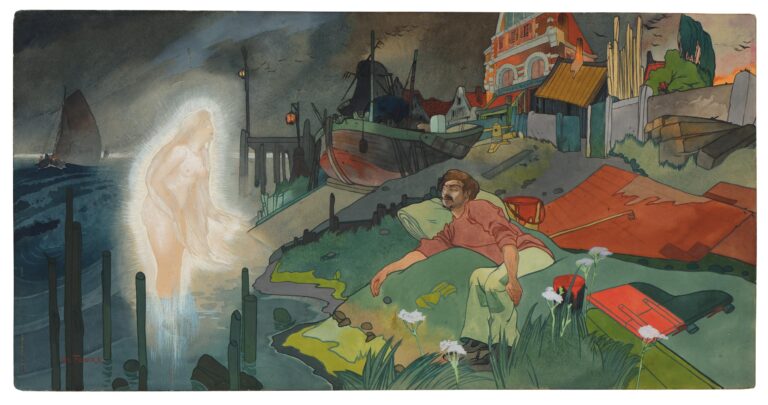
14214
19th–20th centuries
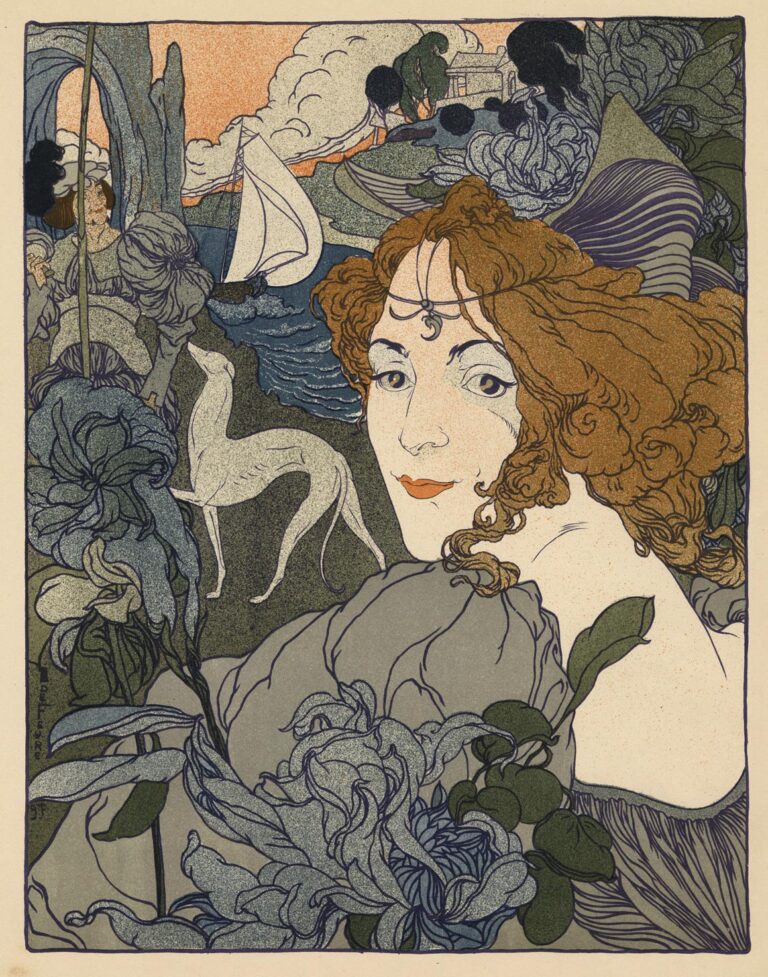
16632
19th–20th centuries
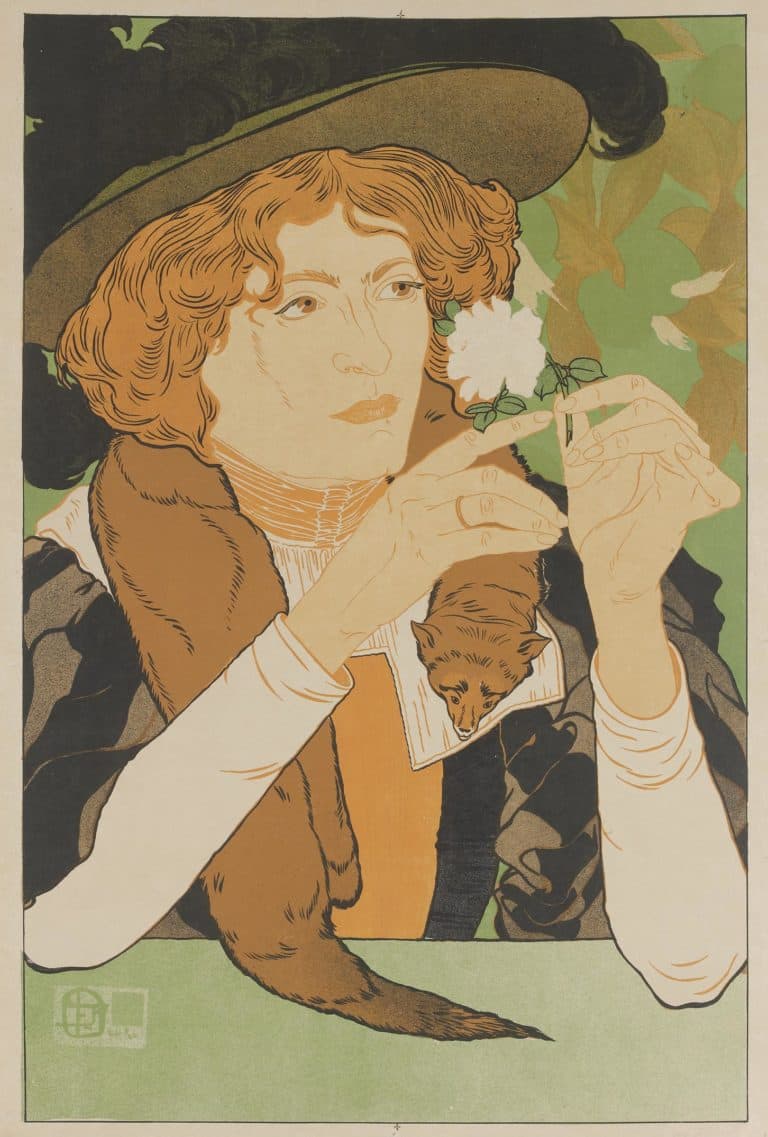
3253
19th–20th centuries