


15151
19th–20th centuries
Louis-Nicolas CABAT
1812 - 1893
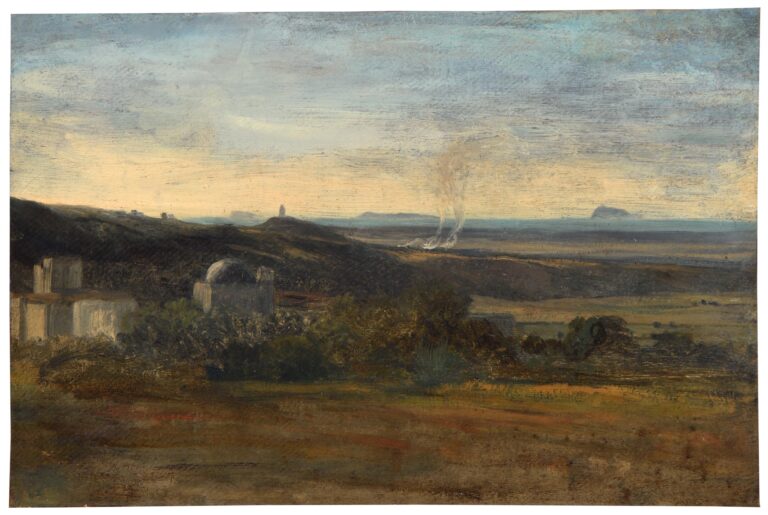
Louis-Nicolas Cabat was born in Paris in 1812 into a family of craftsmen. Placed at a very young age as a porcelain decorator with Gouverneur, he joined the studio of the painter Camille Flers in 1831. His first submission to the Salon of 1833 demonstrated the meticulousness he had retained from his early apprenticeship. Cabat first made a name for himself with the realism of his works, which broke with the traditional historical landscape. Marked by the events of 1830, he was a committed painter, choosing subjects close to his convictions, including peasants at work and bare landscapes.
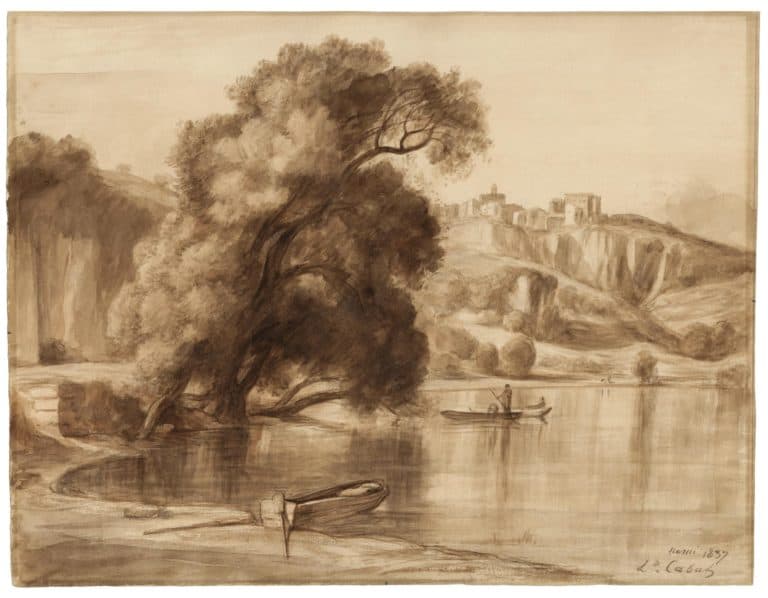
His meeting with Père Lacordaire in 1834 was decisive for the painter, who converted to Catholicism, of which he was a fervent practitioner. Cabat also joined a monastic order, the Confrérie de Saint-Jean, founded by the same Lacordaire in 1839, before leaving in 1846. His association with the preacher gave Cabat a glimpse of a spirituality that matched both his vision of nature and that of his art. The initial realism of his landscapes gave way to an idealised vision of them. Travelling throughout France and Italy, where he seems to have made repeated visits from 1836 onwards, the artist set out in search of subjects that would allow him to celebrate nature and depict the character of the places he visited.
Elected to the Institut in 1867 following the death of the painter Brascassat, Cabat became director of the Académie de France in Rome in 1878. Although he is a little-known artist today, he remains an important figure in nineteenth-century French landscape painting.
Works by Louis-Nicolas CABAT
4036
19th–20th centuries