



21500
19th–20th centuries
Félix BUHOT
Valognes 1847 - Paris 1898
Born in Valognes in 1847, Félix Buhot left his native Normandy to pursue his dream of an artistic career in Paris. Aspiring to be a painter rather than an engraver, he enrolled at the École des Beaux-Arts in 1866 and attended the studios of Isidore Pils and Jules Noël. Endowed with a vivid imagination, Félix Buhot left behind a diverse body of work comprising drawings, paintings, a few rare paintings on earthenware, fans, and nearly two hundred prints.
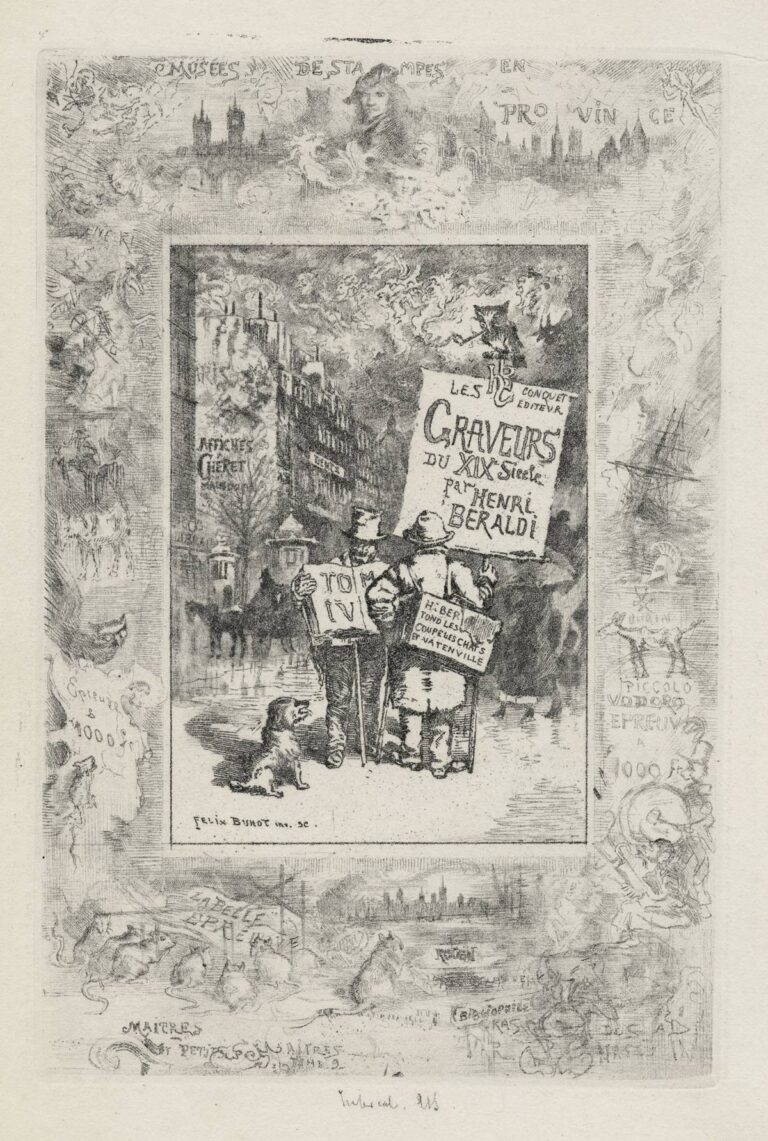
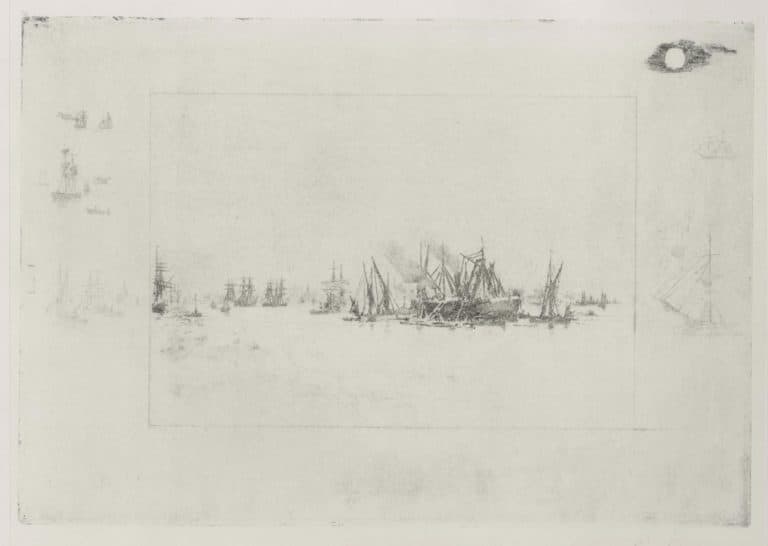
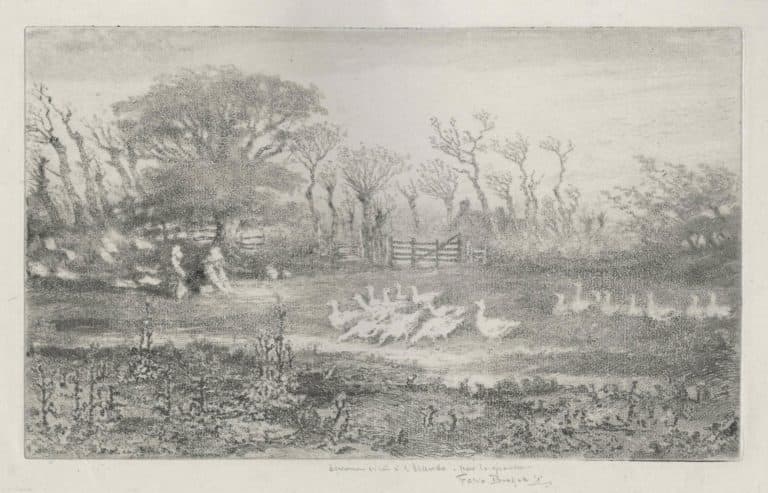
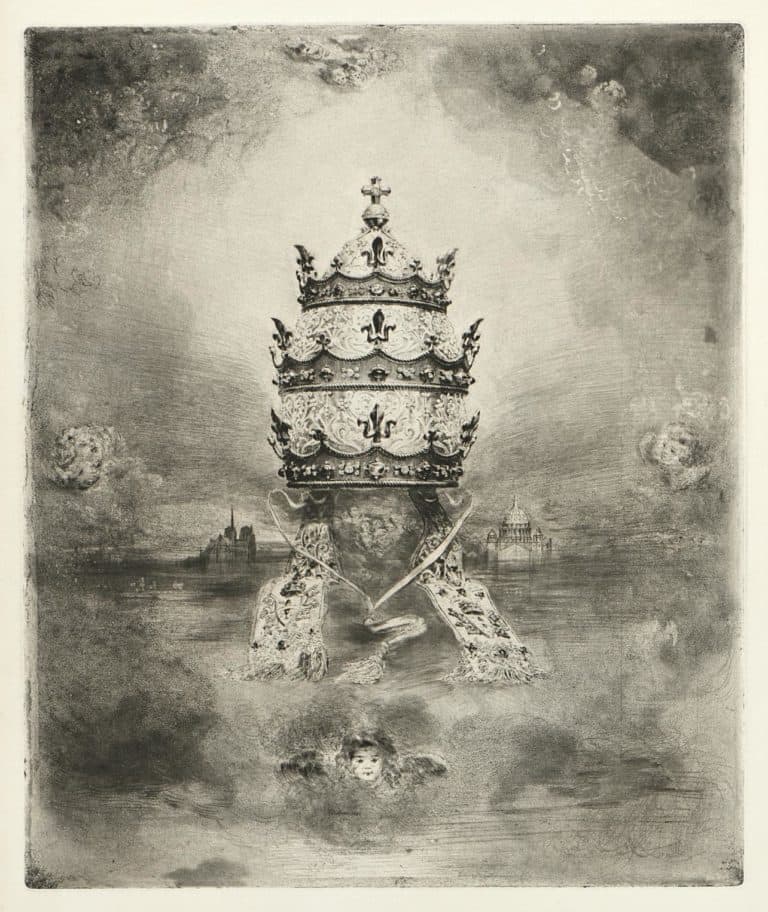
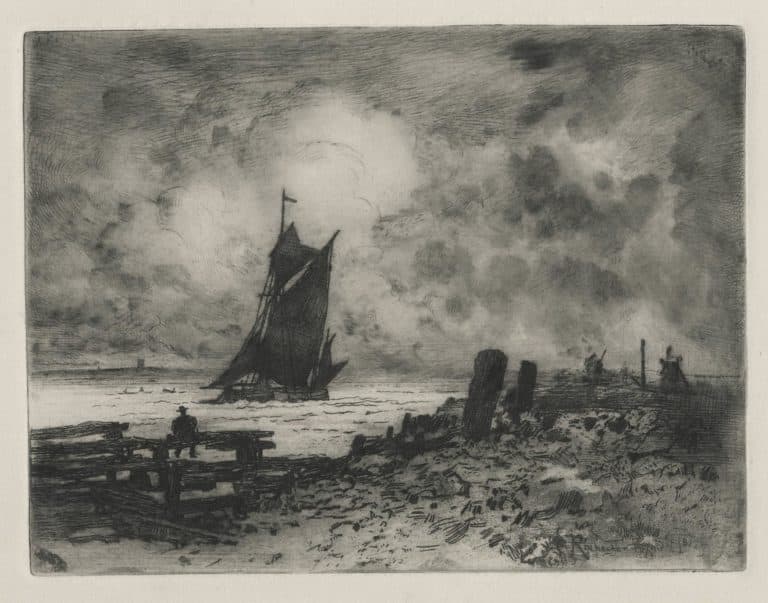
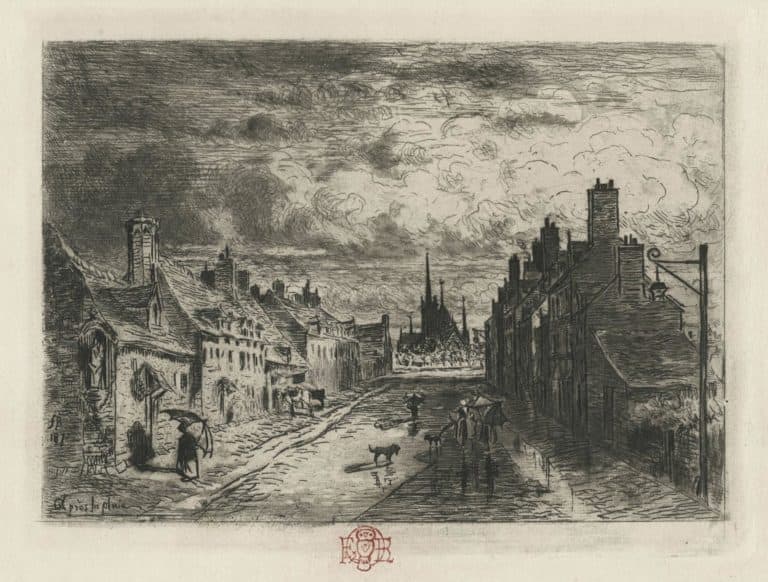
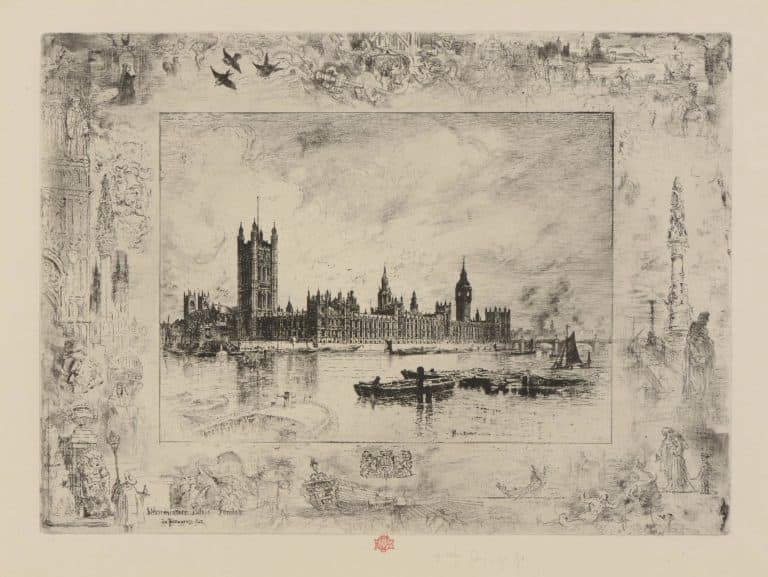
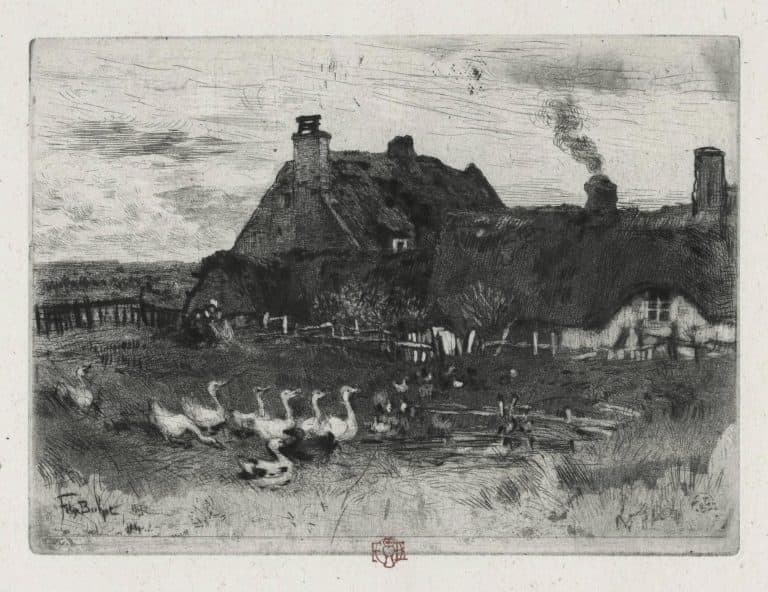
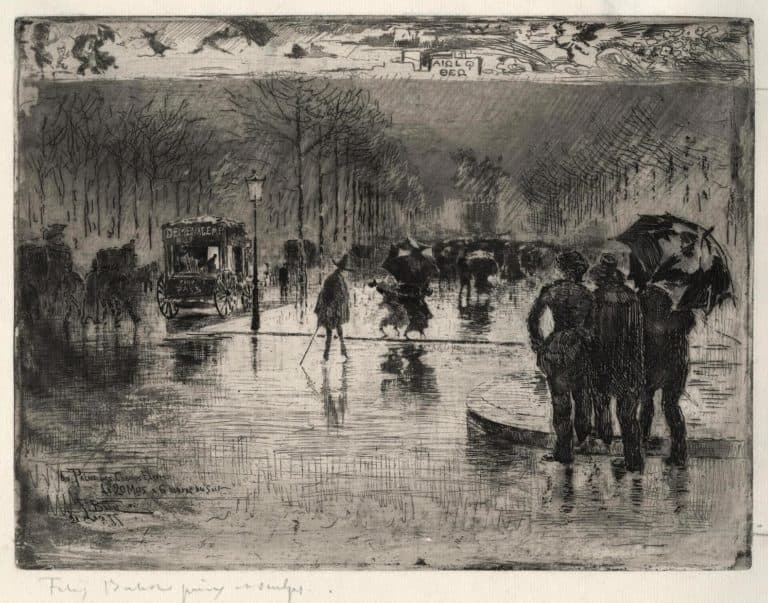
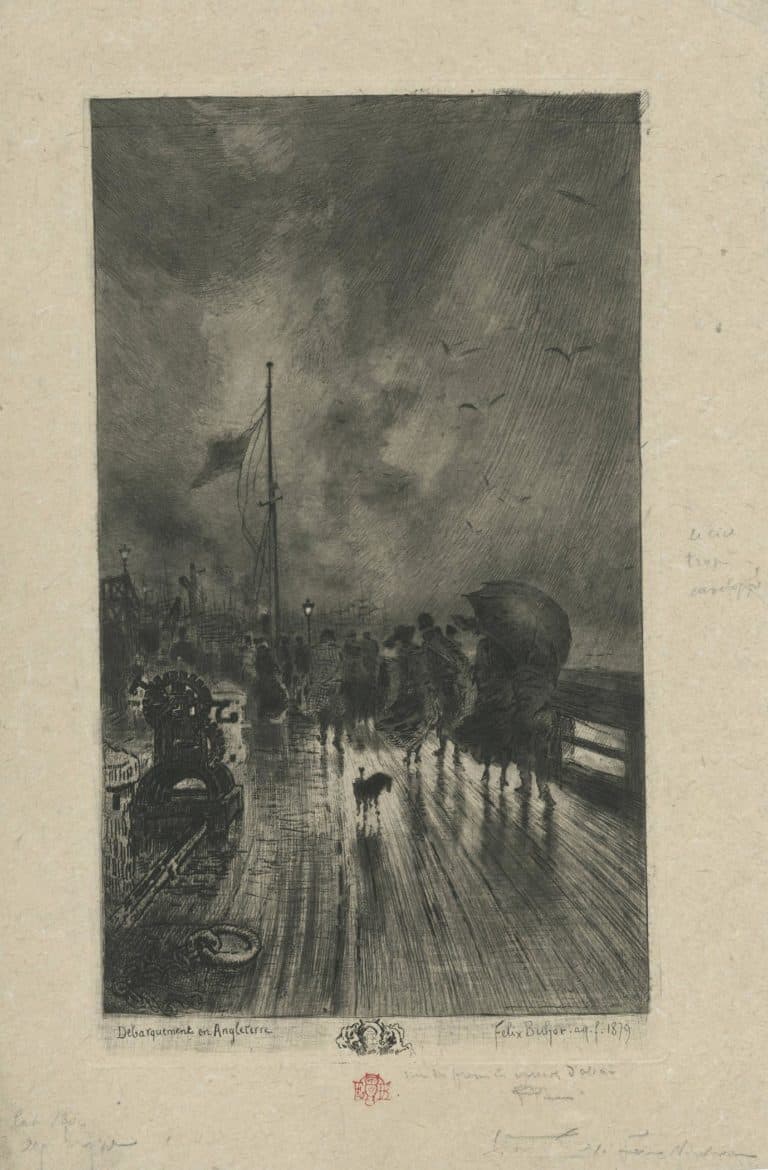
He discovered etching around 1873 and produced his first attempts based on older drawings. Like Degas before him, Buhot was a “hobbyist” engraver. In his plates, which he called “paintings on copper,” the artist combined traditional engraving techniques—etching, aquatint, and drypoint—with ink effects that were his own secret. Sometimes deliberately leaving excess ink on the plate, Buhot uses a brush to create luminous openings, giving the print a fantastical, if not astonishing, quality. He combines these techniques with a keen interest in the paper, which he selects meticulously and, on certain occasions, soaks in tea, turpentine, or even gasoline before printing. Buhot also develops an engraved background around his subjects, providing a narrative complement to the main scene.
More elaborate than mere annotations, these “symphonic margins” are a hallmark of the artist’s style. He also enjoys marking his prints with his famous red stamp featuring an owl (búho in Spanish). These distinctive touches and experiments reflect his quest for the “perfect print,” placing him among the finest etchers of his generation.
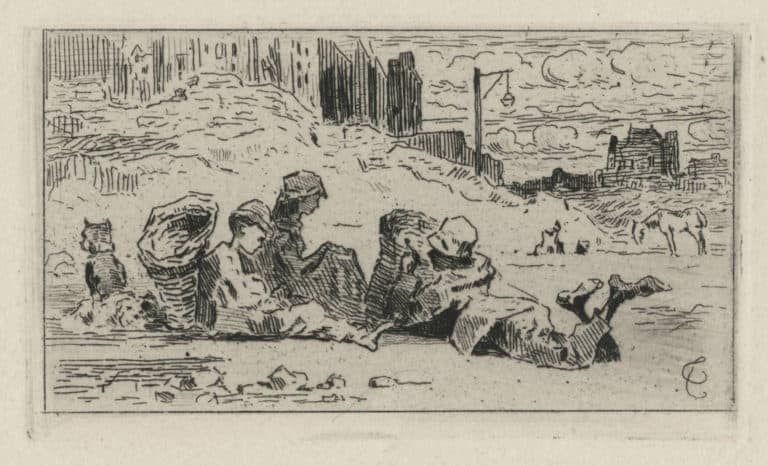
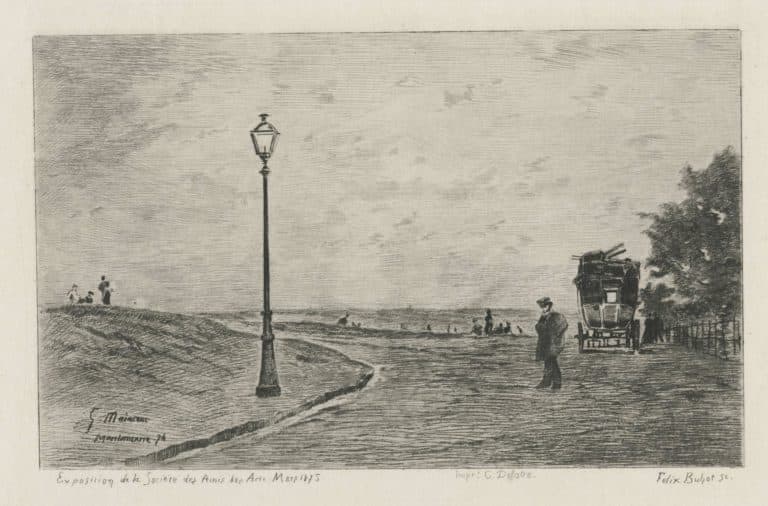
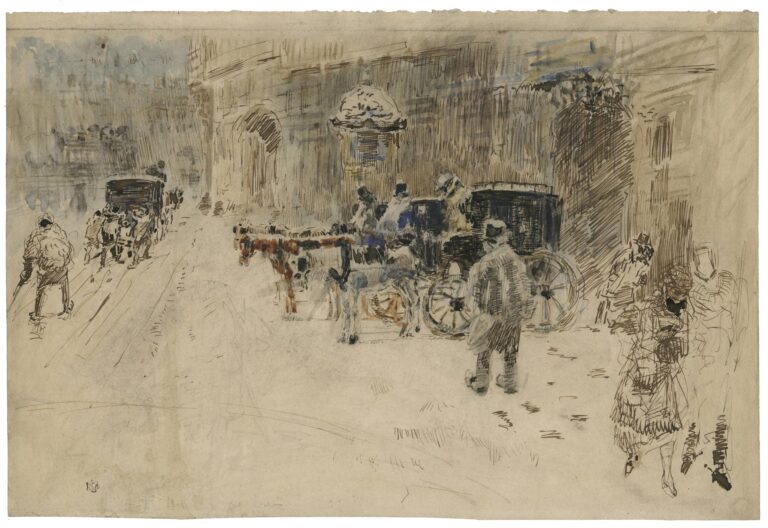
From his travels between Normandy and Paris, the artist offers us engravings with subjects that are sometimes picturesque or somber, but often tinged with humor. Between Pigalle and the Butte aux Cailles, we are presented with fin-de-siècle Paris, teeming with life and in the midst of rapid urban expansion. A few etchings and rare lithographs by the artist provide insight into his travels in England, where he met his wife, Henrietta Johnston.
An active participant in Parisian artistic life, Félix Buhot contributed illustrations to numerous books and magazines. He regularly exhibited at the Salon, hoping to be recognized as a painter, but it was his engravings that met with success, and in 1880 he was awarded a gold medal for his illustrations of Barbey d’Aurevilly. The American public was particularly captivated, and an exhibition dedicated to him was held in New York as early as 1888. An ardent advocate of printmaking, he became a founding member of the Society of Painter-Engravers in 1889, alongside Guérard, Goeneutte, Pissarro, and Bracquemond.
Straddling Romanticism and Impressionism, the artist played an active role
Works by Félix BUHOT

21497
19th–20th centuries
17496
19th–20th centuries
13558
19th–20th centuries
13562
19th–20th centuries
13566
19th–20th centuries
13549
19th–20th centuries
13523
19th–20th centuries
13517
19th–20th centuries
8533
19th–20th centuries
7429
19th–20th centuries
19159
19th–20th centuries
10042
19th–20th centuries
6952
19th–20th centuries
6630
19th–20th centuries