

14926
Contemporains
Avigdor ARIKHA
1929 - 2010
Painter, draftsman, engraver and art historian, Avigdor Arikha is a major figure in contemporary figurative painting. Frequently linked to the work of Lucian Freud or Egon Schiele, his prolific work has been the subject of several international exhibitions, notably at the British Museum and the Bibliothèque Nationale.
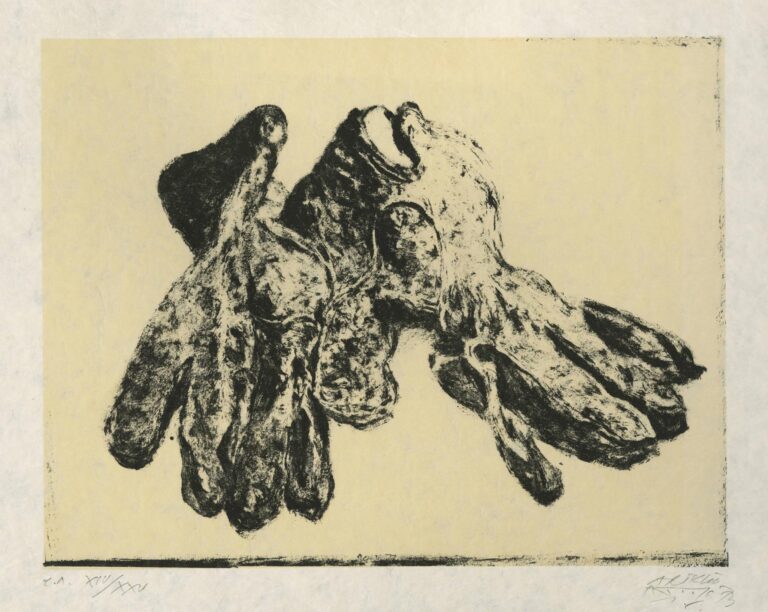
Born to German-speaking Jewish parents in 1929, Arikha suffered Nazi persecution and was interned in a concentration camp in Ukraine in the early 1940s. He was liberated in 1944 by members of the Red Cross delegation and took refuge in Palestine. From 1946, Avigdor Arikha attended the Bezalel School of Arts in Jerusalem. There, he was trained by disciples of the Bauhaus, who taught him a modernist and multidisciplinary approach. This artistic education initially pushed Arikha towards abstraction. At the age of twenty-five, the young artist moved to Paris to attend the Ecole des Beaux-Arts. It was only a few years later that Arikha definitively abandoned abstraction. Encouraged by his friend Alberto Giacometti, this desire to turn to figurative art came to her after contemplating Caravaggio’s Resurrection of Lazarus during an exhibition at the Louvre Museum in 1965. From then on, Arikha produced almost exclusively black and white drawings and engravings, most of which were done in a single session. He returned to color in 1973, but this decision did not affect his corpus : portraits, nudes, urban views, interior scenes and still lifes remained his favorite subjects.
Works by Avigdor ARIKHA